




-
Becas y convocatorias
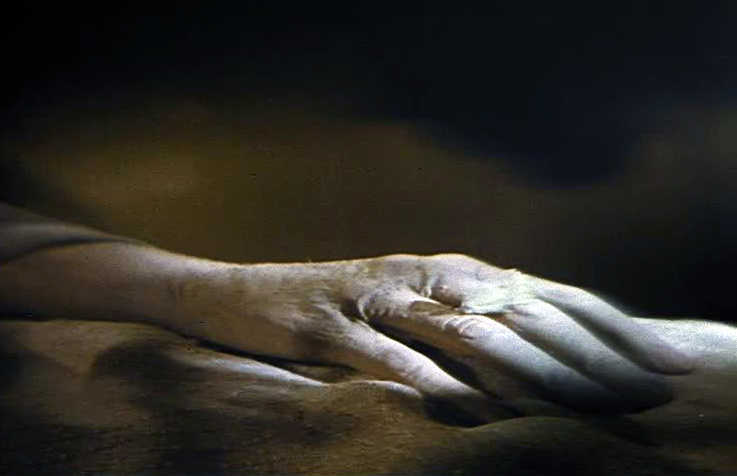
Aleksándr Sokúrov (1951-…) es uno de los cineastas de mayor prestigio en el panorama internacional cinematográfico actual. Licenciado en Historia en 1974, comenzó sus estudios de cinematografía en el VGIK, graduándose en 1978 con La voz solitaria del hombre –adaptación de la novela de Andréi Platónov El río Potudán. Autor de dieciocho largometrajes de ficción y veintiocho documentales hasta la fecha, a pesar de su extremada sensibilidad y de los premios y reconocimientos obtenidos a nivel internacional, su obra ha tenido escasa difusión en el circuito comercial y algunas de sus películas y documentales siquiera se han llegado a distribuir ni estrenar en su propio país.
Uno de los aspectos más interesantes de la obra de Sokúrov es el tratamiento de la imagen a través de las modificaciones aplicadas durante el proceso de producción de sus filmes. En este sentido, mediante deformaciones perspectivas y otra serie de recursos implícitos, Sokúrov trata de profundizar en el cine como experiencia artística, obteniendo una diégesis particular y única que pretende ser una continuación del estado interior del individuo, sintetizando en la imagen toda una cultura clásica rusa de nostalgia y tristeza, pero con una sólida base en los maestros universales de las distintas artes.
Sin embargo, este proceso de generación de la imagen provoca una opacidad en su significado que, en ocasiones dificulta su comprensión global. Por todo ello el espacio final de la imagen en las obras de Aleksándr Sokúrov se plantea más que interesante para un arquitecto. Así, el presente texto –extraído y reelaborado de la tesis doctoral Origen y psyché. Variaciones psico-espaciales de la muerte en Aleksándr Sokúrov, Gunnar Asplund y Bo Widerberg– propone auscultar el espacio diegético de su obra a través de una serie de ensayos comparados de sus películas en relación a la obra de otros cineastas soviéticos como Andréi Tarkovski, Sergéi Eisenstein o Sergéi Paradzhanov; de literatos como Antón Chéjov, Andréi Platónov, GB Shaw o Goethe; de filósofos como Pável Florenski o Gaston Bachelard; y de pinturas y arquitecturas significantes. De modo que se facilite la comprensión plena de la obra del cineasta en un contexto universal ruso-europeo.
De esta forma se definen cinco tipos de espacios en los que se reparten los diferentes filmes analizados, con la muerte como principal hilo conductor de los mismos. El «kairós» como lapso espacial indeterminado entre la vida y la muerte en el que Sokúrov hace resucitar al fantasma de Chéjov en La piedra [1992]. La «alteridad» como recurso espacio-temporal paralelo al tiempo histórico vivido por grandes nombres universales como los líderes Hitler, Lenin, o Hirohito en Moloch [1999], Taurus [2001] y El sol [2005] respectivamente. La «in absentia» surgida como espacio que se reivindica a sí mismo ante situaciones cercanas a la muerte como en los campamentos militares de Aleksandra [2007] o de Voces espirituales [1995]. La revelación de la «paralipómena» como el intraespacio oculto tras las adaptaciones literarias de obras como Crimen y castigo de Dostoievski en el film Páginas susurrantes [1993]. Y el espacio esférico o «ápeiron» en el que se desenvuelve la historia del país en el plano secuencia de El arca rusa [2002] o la dirección de la ópera Borís Godúnov [2010].
Finalmente, el último capítulo resulta como compendio de todos ellos bajo el análisis de un único film, en el que todo su metraje gira en torno a la muerte en presente de una madre, Madre e hijo [1997].
Dado el enigma espacial generado en las imágenes de sus películas; así como la dificultad de acceso a una filmografía vasta y densa, el carácter introvertido del propio autor, y la escasez de fuentes bibliográficas que rodean a la obra del cineasta, la presente monografía emerge como necesidad, pionera en la exploración espacial de la diégesis presentada por Aleksándr Sokúrov.
Aleksandr Sokurov (1951-…) is one of the most prestigious filmmakers in the international cinematic scene nowadays. BA in History, 1974, he began his film studies at the VGIK, where he got his degree in 1978 with his work The Lonely Human Voice —an adaptation of the novel by Andréi Platónov The Potudan River. Author of eighteen fiction feature films and twenty-eight documentaries to date, his work has not been widely available in the commercial market in spite of his acute sensitivity and the international awards and acknowledgements he has received, and some of his films and documentaries have not even been premiered or distributed in his own country.
One of the most interesting aspects of Sokurov’s work is his treatment of the image by means of the modifications made in the production phase of his films. In this respect, by making use of a series of implicit resources such as distorted perspective, Sokurov tries to delve into film making as an artistic experience, with as result a particular and unique diegesis that claims to be a continuation of the individual’s inner state, encapsulating in the image all of Russia’s classic culture full of nostalgy and sadness, but with solid foundations on the universal masters of all the different arts.
Nonetheless, this process of image creation brings about a sort of opacity in its meaning, which sometimes makes its global comprehension more difficult. Therefore, the final space of image in the works of Aleksandr Sokurov becomes specially interesting for an architecht. In this way, the present text —excerpted and reworded from the PhD dissertation Origin and Psyche. Psycho-spatial Variations of Death in Aleksandr Sokurov, Gunnar Asplund, Bo Widerberg— proposes to sound out the diegetic space in his works through a series of comparative essays of his films put in relation to the work of other soviet filmmakers such as Andrei Tarkovski, Sergei Eisenstein or Sergei Paradzhanov; of writers like Anton Chejov, Andrei Platonov, G.B. Shaw or Goethe; of philosophers like Pavel Florenski or Gaston Bachelard; of significant paintings and architectural works. With the aim of facilitating the full comprehension of the filmmaker in an universal Russian-European context.
By so doing, the films in the study —having all death as overarching element— fall into five different types of space, which in turn get defined. The «kairos» as indeterminate spatial lapse between life and death in which Sokurov revives Chejov’s ghost in The Stone [1992]. The «otherness» as spatio-temporal resource that runs parallel to the historic period in whichl leaders such as Hitler, Lenin or Hirohito lived in Moloch [1999], Taurus [2001] and The Sun [2005], respectively. The «in absentia», emerged as space that vindicates itself in light of near-death situations, as in the military encampments of Aleksandra [2007] or Spiritual Voices [1995]. The revelation of the «paralipómena» as the intraspace hidden behind the literary adaptations of works like Dostoievski’s Crime and Punishment in the film Whispering Pages [1993]. And the spherical space or «apeiron», in which the history of the country unfolds itself in the long take of The Russian Arch [2002] or in the conducting of the opera Boris Godunov [2010].
Finally, the last chapter serves as compendium of all the preceding ones under the analysis of just one film, all its lenght revolving around the death of one mother, Mother and Son [1997].
Given the spatial enigma created in the images of his films, the difficulty of accessing a vast and dense filmography, the introvert character of the author himself and the scarcity of bibliographical sources from which the filmmaker’s work suffers, the present monograph comes as a necessity, a pioneer work in the spatial exploration of the diegesis put forth by Aleksandr Sokurov.


Arquitecto
E.T.S. A - Sevilla - US
SEVILLA | ESPAÑA