




-
Becas y convocatorias
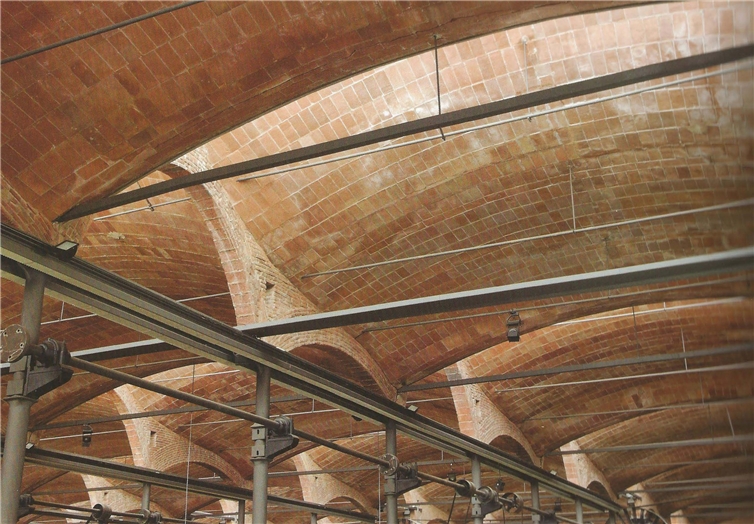
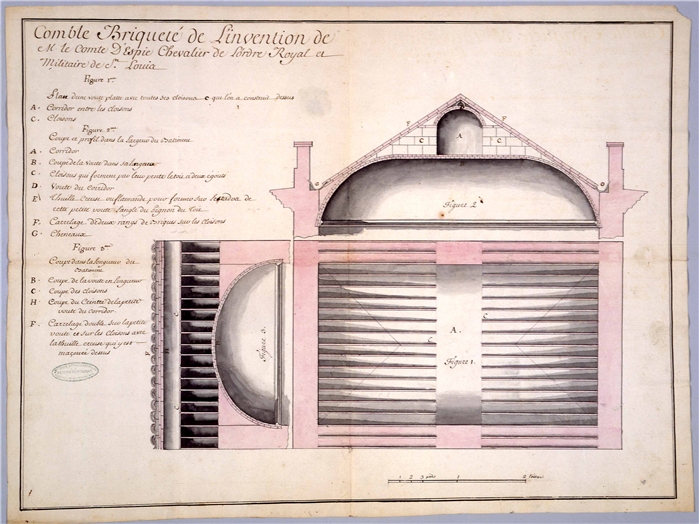
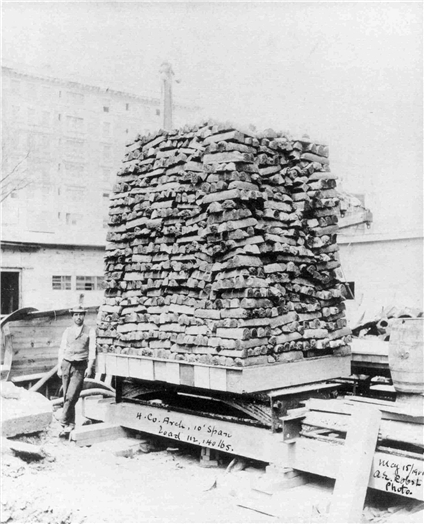
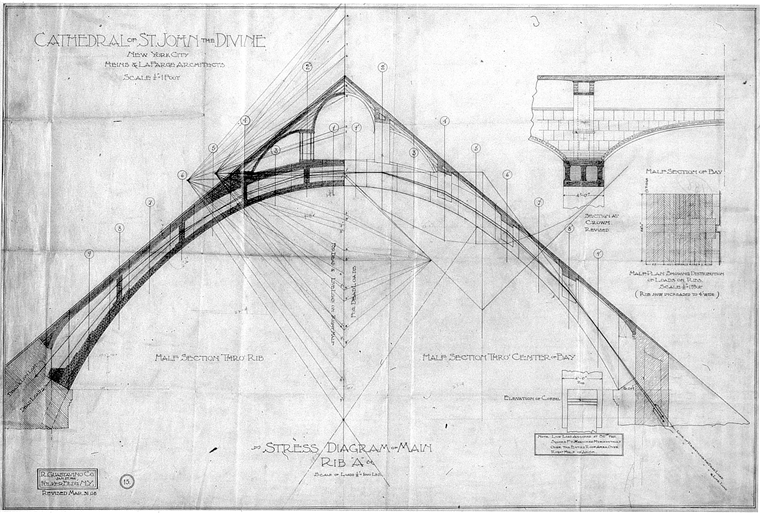
Las bóvedas tabicadas experimentan una importante evolución, casi una transformación, en España a lo largo del s. XIX. En sus inicios, son un sistema constructivo tradicional y codificado durante al menos 3 siglos, con usos, formas y tamaños limitados. 100 años después se emplean de manera generalizada en nuevos tipos edificatorios, con soluciones constructivas novedosas, tamaños mucho mayores y una gran libertad formal.
Esta tesis doctoral indaga en el porqué de esta transformación, desde el punto de vista de la técnica, así como en sus consecuencias, que llegan hasta la actualidad.
El texto se agrupa en tres partes:
La primera, a la que he llamado «La construcción tabicada tradicional» sirve de punto de partida. En ella se ponen en contexto las bóvedas tabicadas antes del s. XIX, como aparecen en España y cual es su desarrollo y distribución territorial hasta finalizar el s. XVIII. En esta parte se ha estudiado:
-la aparición de las bóvedas tabicadas en España, en los últimos años del s. XIV, y como se convierten en un sistema constructivo cada vez más frecuente y consolidado, empezando por el territorio de la Corona de Aragón y extendiéndose desde ahí a Castilla y Andalucía.
-la difusión del sistema tabicado en los tratados de arquitectura españoles de los siglos XVII y XVIII: Fray Lorenzo de San Nicolás, Tosca, Briguz y Brú, García Berruguilla, Plo y Camín; también a través de documentos más prácticos: contratos de obra y pleitos.
-la expansión de la construcción tabicada por Francia desde España. Como allí es aceptada por académicos y tratadistas; como vuelve a España influenciada por esos tratadistas, los más importantes de la época. Y como los tratadistas españoles reproducen las ideas francesas sobre la construcción tabicada en sus escritos. Este aspecto es importante ya que, a pesar de que la construcción tabicada tenía una tradición mucho mayor aquí, las ideas francesas sobre su comportamiento se imponen a las españolas incluso en España.
La segunda parte indaga en los aspectos constructivos del desarrollo de las bóvedas tabicadas a lo largo del siglo XIX. Dentro de ella se describe:
-como se mantiene la construcción tabicada tradicional se a lo largo del siglo XIX, conviviendo con una línea que avanza en la búsqueda de una nueva forma de construir, separándose cada vez más de la inicial. Para mostrar esta pervivencia, se estudian en esta parte tres documentos que se mueven en la línea tradicional, uno de principio de siglo, otro de los años centrales y otro de final del XIX.
-la aparición de dos nuevos materiales: el cemento y el hierro, que en pocos años pasan de tener un uso accesorio en la construcción a fabricarse y utilizarse masivamente. La unión de estos dos materiales con los tradicionales en la construcción de bóvedas tabicadas, yeso y ladrillo, será decisiva en su evolución.
-la creación de dos tipos arquitectónicos nuevos: los edificios industriales y la vivienda masiva. En ambos tipos tiene aplicación la construcción tabicada. Además, estos nuevos tipos son muy importantes en su evolución, ya que sus condicionantes específicos: rapidez de ejecución en ambos casos y búsqueda de luces cada vez mayores y de estructuras incombustibles en el segundo fuerzan al uso de los nuevos materiales disponibles (cemento, hierro) y al proyecto de nuevas formas y soluciones. En este aspecto me he centrado en Cataluña, la primera región industrializada de España y en la que se aplica la bóveda tabicada a los nuevos tipos.
Y la tercera parte estudia los aspectos estructurales del desarrollo de las bóvedas tabicadas a lo largo del siglo XIX:
-la aplicación a las estructuras tabicadas de las teorías de arcos y bóvedas que se desarrollan desde el siglo XVIII. Las bóvedas tabicadas, cuyas dimensiones se obtenian mediante reglas de proporción, se calculan sucesivamente mediante lineas de empuje, análisis de membrana y también se les intenta aplicar la teoría elástica, sin llegar a conseguir resultados válidos. Siguiendo el marco teórico del moderno análisis límite de fábrica, se concluye que es el más adecuado para estudiar estas bóvedas, como cualquier otras construidas con fábrica.
-Un estudio exhaustivo de los ensayos de resistencia que se realizan sobre estructuras tabicadas a lo largo de los siglos XIX y la primera mitad del XX. La razón de estos ensayos es la nueva necesidad, aparecida con la mentalidad científica, de ofrecer garantías técnicas y numéricas sobre los sistemas constructivos y estructurales.
La tesis concluye que las bóvedas tabicadas aparecen en España en el siglo XIV en la zona de Levante; que se extienden por todo el pais del XiV al XVI y que empiezan a ser recogidas en los tratados ya en el siglo XVII; hasta la mitad del siglo XIX la forma en que se construyen y los edificios para los que se utiliza permanecen invariables, sin más novedad que la exportación del sistema constructivo a Francia.
En el siglo XIX confluyen varios motivos por los que las bóvedas tabicadas se transforman: la generalización del uso del hierro y el cemento; la construcción de grandes edificios industriales y la aparición de la mentalidad científica, con el desarrollo de la teoría de estructuras. Los nuevos edificios industriales requieren grandes luces y nuevas formas; los nuevos materiales (especialmente el hierro) permiten estos avances. La teoría de estructuras se aplicará a estas nuevas bóvedas; en conjunto con los datos recogidos en los ensayos realizados dará seguridad a arquitectos y constructores para construir mayores tamaños y formas novedosas.
Tile vaults had significant development, almost a transformation in Spain along the 19th C. At the beginning, they were a traditional building system and codified for at least three centuries, with limited purposes, shapes and sizes. 100 years later they were used widely in new building types, with innovative construction solutions, much larger sizes and a great formal freedom.
This dissertation investigates the reason for this transformation, from the point of view of the technique and in its consequences, that reach today.
The text is divided in three parts:
The first one, which I have called “traditional tile vault construction” is the starting point. Tile vaults before 19th C are put in context, as they appear in Spain. Also the development and distribution until the end of 18th C. In this part has been studied:
- the first tile vaults in Spain, in the last years of 14th C., and how the system become a construction technique, everytime more frecuent, beginning in the territory of the Crown of Aragon (current Valencia, Catalonia and Aragon ) and extending from there to Castile and Andalusia.
-The dissemination of the system in the Spanish architectural treatises of the 17th and 18th centuries: Fray Lorenzo de San Nicolás, Tosca, Briguz and Bru, Garcia Berruguilla, Plo and Camin; also through more practical documents: contracts for work and lawsuits.
-The expansion of tile vaults in France from Spain. There, it is accepted by scholars and writers. From France it comes back to Spain, influenced by these writers, the most important of the time. Spanish writers reproduce French ideas about tile vaults in his writings. This is an important subject, because, even though tile vaults had a much older tradition here , French ideas about their behavior prevailed over the Spanish ones, even in Spain, and this will influence their development.
The second part research the constructive aspects of the development of tile vaults during the 19th C. Within it is described :
- how tradicional tile vaults are used during the 19th C. At the same time, a new way of building is pursued, moving away of the traditional one. To show this survival, three documents, related to the traditional way, are studied in this part, one of the beginning of the century , another one of the middle and another of late century .
- the appearance of two new materials: cement and iron, which in a few years went to have an accessory use in construction manufactured to a widely use. The combination of these materials with traditional tile vault construction, plaster and brick, will be decisive in its development.
- the creation of two new architectural types: industrial buildings and block of flats. In both types tile vaults can be used. Besides, these new types are very important in its development, as their specific conditions: speed of execution in both cases and use of larger spans and fireproof structures in the second case, force the use of the new available materials (cement, iron) as well as the design of new forms and solutions. At this point I have focused on Catalonia, the first industrialized region of Spain where the tile vault is implemented in these new types, especially industrial architecture.
The third part studies the structural aspects of the development of tile vaults throughout the 19th C. Here is studied:
-the application of the theories of arches and vaults developed during the 18th C. to tile vaults. Tile vaults, whose dimensions were obtained during centuries by proportion rules, are calculated now with the thrust lines and membrane analysis. They even try to apply the Elastic Theory , without actually getting successful results. The modern framework of Limit Analysis of Masonry Structures is the most appropriate way to analyse these vaults, as it is for any masonry building.
- a comprehensive study of the strength tests that are performed on tile vaults during the nineteenth century, and the first half of the twentieth. These tests tried to provide technical and numerical guarantees, due to the new scientific mentality.
The thesis concludes that tile vaults appeared in Spain in the fourteenth century in the Levant, which extend over all Spain, being a codified system in the last years of the 16th C. It started to be reflected in the treaties in the 17th C. Until the middle of the 19th C. they are built in the same way and in the same buildings. The only novelty is the exportation to France and the reintroduction in Spain through the influential French treatises .
In the nineteenth century confluence of several reasons that transform tile vaults: the widespread use of iron and cement, the construction of large industrial buildings and the emergence of the scientific mind, with the development of the theory of structures. The new industrial buildings require large spans and new forms. New materials (especially iron) allow these progress. The theory of structures will be applied to these new vaults. This theory, and the data collected in tests will give sureness to architects and builders to build bigger sizes and original shapes.


Arquitecto
E.T.S. A - Madrid - UPM
MADRID | ESPAÑA