




-
Becas y convocatorias
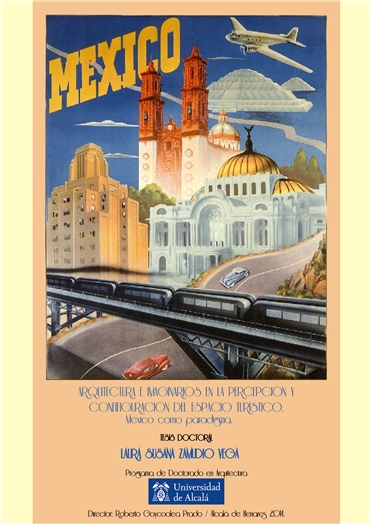
Desde principios del s. XX los imaginarios ‒entendidos como los constructos mentales producto de la interpretación que hacemos de las cosas‒ han sido objeto de atención principalmente en las ciencias sociales. Su importancia e influencia como instrumento para comprender los fenómenos sociales ha ido en aumento, al punto de que en las últimas décadas otras áreas del conocimiento han comenzado a emplearlos en diferentes disciplinas. Esta investigación se enmarca en este contexto, ofreciendo una aproximación arquitectónica al estudio de los imaginarios, concretamente los turísticos. El turismo, tal como hoy se desarrolla, es una de las más importantes fuentes de producción de imaginarios sociales y la arquitectura tiene aquí una participación significativa, englobando desde sus manifestaciones formales y urbanas hasta los aspectos más subjetivos de su capacidad expresiva. A través de estos imaginarios, que a su vez ofrecen pistas de la valoración arquitectónica, la arquitectura tiene una acusada influencia en la percepción, configuración y gestión de los lugares turísticos.
Utilizando como caso de estudio a México, uno de los países con mayor vocación y diversidad turística del mundo, la investigación se desarrolló prestando atención a diversos aspectos que al final terminaron constituyéndose en los cinco capítulos de la Tesis. A saber:
− Cap. 1. Imaginarios, Imaginarios Turísticos. Delinea los conceptos teóricos que consideramos básicos para entender los imaginarios sociales y los turísticos (definición, características, tipos, composición, creación, transmisión).
− Cap. 2. Imaginarios, turismo y arquitectura. Estudia los imaginarios como elementos configuradores del territorio y de lo que de éste se piensa y siente. Así como el análisis de los diferentes roles de la arquitectura en la formación de los imaginarios turísticos, en el proceso del viaje (antes, durante y después) y, finalmente, se hace una revisión de la arquitectura y el lugar turístico entendidos como objeto de consumo.
− Cap. 3. Turismo y Arquitectura. Analiza la participación de la arquitectura en el turismo, reconociendo tres vínculos básicos: a) como infraestructuras y equipamientos, b) como atractivo turístico y c) como herramienta para transmitir un mensaje mediante su representación en la publicidad. De aquí, se proponen tres formas de abordar el estudio de la arquitectura, los imaginarios y el turismo y, finalmente, se reflexiona sobre la consideración de la arquitectura en las Marcas Territorio.
− Cap. 4. Valoración turística de la arquitectura. El caso de México. Estudia cuatro medios que el turista utiliza para acercarse a los destinos turísticos, concretamente a México, analizándose uno a uno los edificios que se recomienda visitar. De aquí surgieron 24 criterios por los cuales la arquitectura se describe como atractivo turístico, los cuales se han descrito y dividido en 5 clasificaciones. Se estudian también las imágenes empleadas, para distinguir el imaginario turístico de México transmitido en estos medios.
− Cap. 5. Materialización arquitectónica y urbana de los imaginarios turísticos. Finalmente, en base al análisis teórico realizado en los dos primeros capítulos y del estudio de las corrientes turísticas contemporáneas que reclaman una arquitectura específica, se revisan 5 imaginarios (dominantes a nivel global) que tienen la propiedad de materializarse en la arquitectura turística.
Al tratarse de un estudio interdisciplinar, esta investigación ofrece la oportunidad de ver la arquitectura y el territorio turístico desde dos perspectivas poco habituales: a) una más diversa y compleja, con la que se pretende poner en valor la importancia de lo subjetivo para el diseño arquitectónico y la planeación urbana y b) la que considera las arquitecturas de “poco o nulo” interés arquitectónico pero que son atractivas para la sociedad. Aspectos que, por lo estudiado, condicionan los comportamientos socioeconómicos, socioculturales y el uso que se hace de los lugares turísticos. Por último, la Tesis pretende ofrecer herramientas para el estudio de otros destinos turísticos, ya que los criterios de análisis seguidos para México, pueden emplearse para estudiar cualquier otro.
Palabras clave:
Arquitectura, Imaginarios Sociales, Imaginarios Turísticos, Turismo, Turista, Percepción, Territorio, Escala, Publicidad, Medios de Transmisión, Consumo, Tipología Turística, Marketing turístico, City Marketing, Marca Territorio, Marca Turística, Imagen turística, Patrimonio, Infraestructuras, Equipamientos, Atractivos Turísticos, México, Memoria e identidad, Curiosidades, Forma y Materia, Entorno, Función, Pintoresquismo, Fantasía, Vanguardia, Exclusividad, Lujo, Naturaleza.
Since the beginning of the 20th century, the imaginaries (the mental constructions derived from the interpretation that we make about objects) have been a very important subject in general and especially in Social Sciences. Their importance and influence as a tool for understanding social phenomena have been rising to the point that in the last decades other areas of knowledge have begun using it. This research is to be seen in this context, offering an architectonic approach to the study of imaginaries, especially the touristic ones. Tourism has been developed until the present day as one of the principal sources of production of social imaginaries, and architecture is playing a major role in it, from the formal aspects, urban manifestations to the most subjective forms of expression. Through all of these imaginaries, which at the same time are constantly offering us clues of architectonic value, architecture has a substantial influence on the perception, configuration and management of touristic places.
Mexico, one of the countries with the highest touristic potential and diversity in the world, is used here as a case study. The research was carried out by paying attention to several aspects that eventually became the five chapters of the thesis:
-Chapter 1. Imaginaries, tourism imaginaries. In this chapter, we trace the fundamental concepts in order to understand social and tourism imaginaries (definition, characteristics, types, composition, creation, transmission).
-Chapter 2. Imaginaries, tourism and architecture. In this chapter, we study the imaginaries as elements that shape the territory and how territory is thought and felt. We also analyse the different roles that architecture plays in constructing tourism imaginaries, in the process of a travel (before, during and after) and, finally, we review the touristic site and architecture considering them as objects of consumption.
-Chapter 3. Tourism and architecture. In this chapter, we analyse the participationof architecture in tourism by recognizing three fundamental links: a) infrastructure and equipment; b) tourist attraction; c) as a tool for transmitting a message through its representation in advertising. Then we offer three different approaches for studying architecture, imaginaries and tourism. Finally, we reflect on how architecture is considered in the Brands of Territory.
-Chapter 4. Tourist appreciation of architecture. The case of Mexico. In this chapter we studyfour types of media that tourists use to learn about touristic destinations, specifically about Mexico, analyzing one by one the buildings that are worth visiting. From here 24 criteria emerged, by which architecture is described as a tourist attraction. We have described them and then divided them in 5 classifications. We have also analysed the pictures used, in order to distinguish the tourist imaginaries of Mexico that these media transmit.
-Chapter 5. Urban and architectonic realization of tourism imaginaries. Finally, based on the theoretical analysis of the first two chapters and the study of contemporary tourism trends that claim a more specific architecture, we review 5 imaginaries (globally dominant) that have the feature of materializing in the tourism architecture.
As this is an interdisciplinary study, this research provides the opportunity to see architecture and tourist territory from two unusual perspectives: a) a more diverse and complex one, which aims at highlighting the subjective aspect in architectonic design and urban planning, and b) another one that considers the architecture of “little or no” architectonic value but that is still attractive to society. Aspects which have been studied in this research determine socioeconomic and socio-cultural behaviors and the use of touristic sites. Finally, the thesis aims at providing tools for the study of other tourist destinations, since the criteria of analysis followed for Mexico can be used to study any other destination.
Keywords:
Architecture, Social Imaginaries, Touristic Imaginaries, Tourism, Tourist, Perception, Territory, Scale, Media, Advertising, Consumption, Tourist Typology, Travel Marketing, City marketing, Brand, Tourist brand, Tourist image, Heritage, Infrastructure, Equipments, Tourist Attractions, Mexico, Memory and Identity, Curiosities, Form and Matter, Environment, Pintoresquismo, Fantay, Vanguard, Exclusiveness, Luxury, Nature.


Arquitecto
Universidad de Alcalá, Madrid, España
Baja California Norte | MÉXICO